Đề thi thử tốt nghiệp THPT 2026 Tiếng Anh Hà Tĩnh mã đề 0202

Đề thi thử tốt nghiệp THPT 2026 môn Tiếng Anh của Sở GD&ĐT Hà Tĩnh, mã đề 0202, có lời giải chi tiết. Đề 50 phút, 40 câu trắc nghiệm một đáp án, mỗi câu 0,25 điểm: câu 1–10 đọc hiểu về Hiệp ước Đại dương toàn cầu; câu 11–15 điền câu vào đoạn văn; câu 16–23 đọc hiểu về thiết kế giao diện di động; câu 24–28 sắp xếp hội thoại, thư, đoạn văn; câu 29–40 điền từ vào tờ rơi và thông báo.

  • 40 câu
  • Thi thử
  • Trung bình
  • 50 phút
  • Năm học 2025-2026
  • Nguồn: Sở GD&ĐT Hà Tĩnh

Chọn mẫu đề và điền tên trường của bạn trước khi in · Lưu thành PDF ngay trong hộp thoại In

Họ và tên: ....................................Lớp: ..................Số báo danh: ..............

Read the following passage and mark the letter A, B, C or D on your answer sheet to indicate the best answer to each of the following questions from 1 to 10.

After more than fifteen years of negotiations and public campaigning, the Global Ocean Treaty entered into force in early 2026. For the first time, areas of the ocean beyond national jurisdiction are subject to an international framework intended to facilitate large-scale marine conservation. Environmental organisations view the agreement as a decisive shift, addressing decades of fragmented governance and limited oversight in the High Seas, where economic interests have often taken priority over ecological concerns.

Less than one percent of these waters is currently fully or highly protected. This regulatory gap has enabled industrial fishing and potential deep-sea mining activities to proceed with relatively few constraints. [I] The Treaty introduces a procedure allowing governments to designate marine protected areas in international waters. If applied ambitiously, such measures could safeguard over one-third of the global ocean, forming an unprecedented network of protected ecosystems.

The agreement’s relevance extends beyond biodiversity. Oceans absorb a significant share of global carbon emissions and help stabilise the planet’s climate systems, acting as a buffer against more extreme warming trends. Nearly half of Earth’s biodiversity exists beneath the waves, and billions depend on marine ecosystems for food security and economic stability. Protecting the High Seas is therefore closely linked to both environmental balance and human welfare.

[II] However, legal recognition alone does not ensure ecological recovery. Implementation will rely on political resolve, credible scientific assessment and cooperation among states. Proposals for protected zones must be supported by evidence-based evaluations and developed in consultation with affected communities. In the absence of effective monitoring and enforcement mechanisms, conservation commitments may lack practical impact.

Governments have pledged to protect 30 percent of the world’s oceans by 2030 – a target commonly known as “30x30.” [III] Achieving this ambition requires identifying ecologically critical regions and limiting extractive activities accordingly. The first Conference of the Parties (COP) will influence how obligations are interpreted and applied in practice.

[IV] The Treaty signals progress in international environmental diplomacy. Whether it ultimately reshapes ocean governance will depend on the extent to which states convert formal commitments into sustained action.

(Adapted from https://www.greenpeace.org.uk)

Question 1. (0,25 điểm)

According to paragraph 1, the Global Ocean Treaty represents a turning point mainly because it ______.

  1. A.

    places environmental organisations in charge of ocean conservation

  2. B.

    establishes a global system to better govern activities in the High Seas

  3. C.

    replaces fragmented national regulations with a single global law

  4. D.

    removes economic interests from decision-making in international waters

Question 2. (0,25 điểm)

Which of the following best summarises paragraph 2?

  1. A.

    Industrial fishing has already been effectively controlled in most international marine areas.

  2. B.

    International waters are already widely protected under existing global conservation frameworks.

  3. C.

    Deep-sea mining has become the dominant economic activity across international waters.

  4. D.

    The Treaty aims to address regulatory gaps that allowed extensive exploitation of international waters.

Question 3. (0,25 điểm)

Which of the following is NOT stated in the passage as a function of the oceans?

  1. A.

    Producing renewable marine energy

  2. B.

    Regulating planetary climate systems

  3. C.

    Absorbing global carbon emissions

  4. D.

    Supporting marine biodiversity worldwide

Question 4. (0,25 điểm)

The word constraints in paragraph 2 mostly means ______.

  1. A.

    opportunities

  2. B.

    advantages

  3. C.

    restrictions

  4. D.

    expansions

Question 5. (0,25 điểm)

The phrase such measures in paragraph 2 refers to ______.

  1. A.

    industrial fishing operations

  2. B.

    extractive marine industries

  3. C.

    regulatory gaps in governance

  4. D.

    the creation of marine protected areas

Question 6. (0,25 điểm)

Which of the following best paraphrases the underlined sentence in paragraph 3?

  1. A.

    Safeguarding international waters contributes to ecological and human stability.

  2. B.

    Human welfare depends only on economic development.

  3. C.

    Climate stability can be achieved without marine conservation efforts.

  4. D.

    Ocean protection is primarily a wildlife conservation concern.

Question 7. (0,25 điểm)

According to paragraph 4, successful implementation of the Treaty requires __________.

  1. A.

    cooperation among states, credible scientific assessment, and sustained political commitment

  2. B.

    automatic enforcement mechanisms established through binding international legal frameworks

  3. C.

    substantial financial investment from multinational corporations involved in marine industries

  4. D.

    immediate ecological recovery across protected international marine ecosystems worldwide

Question 8. (0,25 điểm)

It can be inferred from the passage that ______.

  1. A.

    the Treaty’s practical impact may differ depending on how governments prioritise national interests

  2. B.

    effective marine conservation requires limiting all economic activities in the High Seas

  3. C.

    the 30x30 target establishes a shared framework that promotes uniform implementation among states

  4. D.

    formal legal recognition by itself is sufficient to ensure ecological recovery in international waters

Question 9. (0,25 điểm)

Where in the passage does the following sentence best fit?

“At the same time, disagreements over how far economic activities should be restricted in order to meet this target may make such decisions harder to make.”

  1. A.

    [III]

  2. B.

    [I]

  3. C.

    [IV]

  4. D.

    [II]

Question 10. (0,25 điểm)

Which of the following best summarises the passage?

  1. A.

    The governance of the High Seas continues to face structural challenges that complicate effective international regulation.

  2. B.

    International marine agreements often appear ambitious, yet their practical impact may remain limited without enforcement.

  3. C.

    The Global Ocean Treaty represents diplomatic progress, but its long-term impact depends on sustained political commitment.

  4. D.

    Ocean protection efforts frequently encounter resistance when economic interests and development priorities are at stake.

Read the following passage and mark the letter A, B, C or D on your answer sheet to indicate the option that best fits each of the numbered blanks from 11 to 15.

Consumers are often encouraged to support businesses that present themselves as environmentally responsible. Public discussion has largely focused on greenwashing, in which companies exaggerate their environmental achievements in order to gain public approval. Yet researchers have also identified a contrasting practice known as brownwashing. (11) ______. At first, this seems surprising, because companies usually benefit from appearing responsible and forward-looking.

(12) ______. Some businesses fear that strong green claims may attract criticism, closer scrutiny, or expectations they may not be able to meet later. This can be especially true when profits are uncertain, competition is intense, or environmental targets are difficult to maintain over time. Silence may therefore appear safer than praise. In such situations, (13) ______, firms may choose modest language or avoid discussing their environmental record in detail.

Brownwashing can create problems for consumers, investors, and policymakers. (14) ______, distinguishing genuine progress from weak environmental performance becomes more difficult. This reduces trust in sustainability reporting and may prevent responsible firms from receiving the recognition they deserve. At the same time, (15) ______. Environmental progress is often gradual and difficult to measure accurately, so careful wording may sometimes be reasonable. The real issue is whether a company is communicating cautiously or intentionally withholding favourable information.

(Adapted from https://news.umich.edu)

Question 11. (0,25 điểm)
  1. A.

    Environmental achievements may occasionally be described in cautious or restrained language

  2. B.

    The term refers to deliberately understating real environmental progress in company reports

  3. C.

    Some firms emphasise long-term environmental goals rather than current measurable progress

  4. D.

    Some companies frame sustainability strategies mainly as commitments for future improvement

Question 12. (0,25 điểm)
  1. A.

    Environmental communication has become increasingly important in modern strategy

  2. B.

    However, emphasising environmental success is not always risk-free for companies

  3. C.

    For example, some firms highlight sustainability claims to improve public perception

  4. D.

    In addition, environmental reporting has become an important tool for transparency

Question 13. (0,25 điểm)
  1. A.

    although environmental transparency is increasingly promoted by advocacy groups

  2. B.

    if publicising environmental success is likely to bring unwanted attention or pressure

  3. C.

    because consumers increasingly expect clear evidence of sustainability commitments

  4. D.

    unless investors demand more detailed information about environmental performance

Question 14. (0,25 điểm)
  1. A.

    Supported by independent verification and consistent environmental reporting standards across industries

  2. B.

    Driven by the need to improve transparency in corporate sustainability communication practices overall

  3. C.

    By deliberately downplaying or omitting genuine environmental achievements in company reports

  4. D.

    By presenting environmental data in a cautious and generally balanced manner across formal reports

Question 15. (0,25 điểm)
  1. A.

    environmental reports may provide only partial insight into long-term sustainability outcomes

  2. B.

    not every cautious statement about environmental progress should be considered deceptive

  3. C.

    companies sometimes avoid strong environmental claims because legal risks may arise

  4. D.

    some cautious statements about environmental progress are intended to mislead consumers

Read the following passage and mark the letter A, B, C or D on your answer sheet to indicate the best answer to each of the following questions from 16 to 23.

As mobile devices have become the primary means through which many users access digital content, ensuring effective mobile usability has become a central concern for designers. Unlike desktop interfaces, mobile screens are significantly smaller and rely heavily on touch interaction rather than precise cursor control. This limitation requires designers to prioritise simplicity, clarity and intuitive navigation structures that reduce cognitive load and guide users efficiently across digital platforms.

One of the most common challenges in mobile design is overcrowding. When too many elements compete for attention on a limited screen, users may struggle to locate essential features quickly and accurately. Clear visual hierarchy, consistent layout patterns and readable typography can significantly enhance usability by directing attention to the most important content. Designers are therefore encouraged to eliminate unnecessary elements while maintaining functional balance and aesthetic consistency.

Navigation plays a particularly critical role in mobile usability. Because users cannot depend on large, multi-level menus, navigation systems must be streamlined and logically organised. Common solutions include simplified menu icons, fixed navigation bars and gesture-based controls that enable faster interaction. However, these tools must be implemented carefully, as hidden or unclear functions may frustrate users and reduce overall satisfaction.

Another crucial factor is performance speed. Mobile users typically expect immediate access to information, especially when browsing on the move. Slow loading times, heavy graphics or excessive animations can negatively affect engagement and increase abandonment rates. Optimising images, reducing background processes and ensuring responsive design across various devices are practical strategies that enhance user experience and long-term engagement.

Ultimately, successful mobile usability depends on understanding real user behaviour. By testing prototypes and analysing feedback, designers can identify obstacles and refine navigation systems accordingly. They can then adjust interface elements to better meet user expectations. In today’s mobile-driven environment, usability is no longer optional but essential for maintaining competitiveness and user loyalty.

(Adapted from https://consumersearch.com)

Question 16. (0,25 điểm)

Which of the following is NOT mentioned as a way to improve mobile usability?

  1. A.

    Testing prototypes with users

  2. B.

    Optimising performance speed

  3. C.

    Expanding multi-level navigation systems

  4. D.

    Maintaining clear visual hierarchy

Question 17. (0,25 điểm)

The word streamlined in paragraph 3 can be best replaced by ______.

  1. A.

    decorated

  2. B.

    expanded

  3. C.

    accelerated

  4. D.

    simplified

Question 18. (0,25 điểm)

The word abandonment in paragraph 4 is OPPOSITE in meaning to ______.

  1. A.

    withdrawal

  2. B.

    hesitation

  3. C.

    engagement

  4. D.

    delay

Question 19. (0,25 điểm)

The word They in paragraph 5 refers to ______.

  1. A.

    navigation systems

  2. B.

    mobile users

  3. C.

    designers

  4. D.

    digital platforms

Question 20. (0,25 điểm)

Which of the following best paraphrases the underlined sentence in paragraph 5?

  1. A.

    User loyalty depends mainly on aesthetic presentation.

  2. B.

    Visual appeal is more important than functionality.

  3. C.

    Designers may treat usability as a secondary design concern.

  4. D.

    Usability has become indispensable for competitive success in mobile markets.

Question 21. (0,25 điểm)

Which of the following is TRUE according to the passage?

  1. A.

    Performance speed has little impact on engagement.

  2. B.

    Hidden navigation features may decrease user satisfaction.

  3. C.

    Mobile users prefer complex menu systems.

  4. D.

    Desktop interfaces function identically to mobile platforms.

Question 22. (0,25 điểm)

Which paragraph mentions reducing cognitive strain during interaction?

  1. A.

    Paragraph 2

  2. B.

    Paragraph 1

  3. C.

    Paragraph 3

  4. D.

    Paragraph 4

Question 23. (0,25 điểm)

Which paragraph refers to strategies aimed at preventing user disengagement?

  1. A.

    Paragraph 4

  2. B.

    Paragraph 2

  3. C.

    Paragraph 5

  4. D.

    Paragraph 3

Mark the letter A, B, C, or D on your answer sheet to indicate the best arrangement of utterances or sentences to make a meaningful exchange or text in each of the following questions from 24 to 28.

Question 24. (0,25 điểm)

a. Helen: No, it’s been extended until Friday.

b. Jason: That’s great news. Thanks for telling me.

c. Jason: Hi Helen, do you know if the project deadline is still tomorrow?

  1. A.

    c – a – b

  2. B.

    c – b – a

  3. C.

    b – a – c

  4. D.

    b – c – a

Question 25. (0,25 điểm)

a. Tom: That’s impressive! I think small daily actions can make a big difference to the environment.

b. Anna: I try to reduce plastic waste by bringing my own shopping bags and water bottle.

c. Tom: Absolutely. Protecting the environment should be everyone’s responsibility.

d. Tom: You’re always involved in environmental activities. What do you usually do?

e. Anna: I agree. If more people changed their habits, we could reduce pollution significantly.

  1. A.

    c – b – a – e – d

  2. B.

    d – b – a – e – c

  3. C.

    a – b – d – e – c

  4. D.

    d – a – b – e – c

Question 26. (0,25 điểm)

Dear Ms Brown,

a. If you have already checked in online, please log in again to select a new departure time.

b. Your original flight on September 15th at 10:30 a.m. has been rescheduled to 2:45 p.m. on the same day.

c. We apologise for any inconvenience this change may cause and appreciate your understanding.

d. Should this new schedule be unsuitable, you may request a full refund or choose an alternative flight at no additional cost.

e. We are writing to inform you that due to operational adjustments, your upcoming flight has been affected.

Kind regards,

Skyline Airways

  1. A.

    b – a – e – d – c

  2. B.

    e – b – d – a – c

  3. C.

    b – e – a – d – c

  4. D.

    e – d – b – a – c

Question 27. (0,25 điểm)

a. Gradually, through these demanding tasks and the interactions I had with the people we were helping, I began to realise that even relatively small contributions could have a meaningful impact on the well-being of an entire community.

b. During the summer break, I decided to sign up for a weekend volunteering programme at a local shelter, assuming that the experience would mainly involve simple tasks and would not require much effort or preparation.

c. However, once the programme actually began, preparing meals, organising donated clothes, and cleaning the facilities proved far more physically and emotionally demanding than I had originally expected.

d. Reflecting on the experience afterwards, I realised that those challenging moments had strengthened my sense of responsibility and significantly changed the way I viewed community service.

e. At the beginning, I underestimated how much time, patience, and teamwork would be required to complete even the most routine activities effectively.

  1. A.

    b – e – c – a – d

  2. B.

    e – c – d – b – a

  3. C.

    b – c – e – d – a

  4. D.

    e – c – b – a – d

Question 28. (0,25 điểm)

a. As a result, the country has reduced its dependence on fossil fuels and strengthened its long-term energy security.

b. To address these concerns, the government has invested heavily in solar farms, wind power projects and modern energy storage systems.

c. Over the past decade, the nation has faced increasing pressure to cut carbon emissions and modernise its outdated power infrastructure.

d. These strategic initiatives have not only lowered greenhouse gas emissions but also created thousands of new jobs in the clean energy sector.

e. Recognising the urgency of climate change, policymakers have introduced a series of reforms to accelerate the transition to renewable energy sources.

  1. A.

    c – e – d – b – a

  2. B.

    e – b – c – a – d

  3. C.

    c – e – b – d – a

  4. D.

    e – c – b – a – d

Read the following leaflet and mark the letter A, B, C, or D on your answer sheet to indicate the option that best fits each of the numbered blanks from 29 to 34.

Exercise and Alcohol: Understanding the Facts

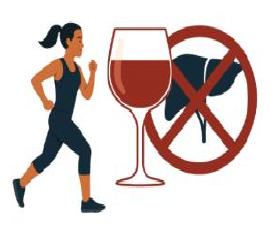
Hình minh hoạ — Đề thi thử tốt nghiệp THPT 2026 Tiếng Anh Hà Tĩnh mã đề 0202 Many people believe that regular exercise can (29) ______ the harmful effects of alcohol. Although physical activity improves fitness and heart health, it does not remove the risks (30) ______ drinking.

Studies show that exercise may support cardiovascular function, (31) ______ alcohol can still damage the liver and other vital organs. Being active does not “cancel out” excessive drinking.

To protect long-term health:

  • Adopt a (32) ______ combining physical activity with responsible drinking.

  • Maintain discipline and awareness.

  • Review your drinking patterns and exercise habits by tracking the (33) ______ of units of alcohol you consume each week.

  • Take a balanced approach in order to (34) ______ the overall risk of alcohol-related diseases, rather than expecting exercise alone to cancel out the effects of drinking.

Question 29. (0,25 điểm)
  1. A.

    overlook

  2. B.

    offset

  3. C.

    excuse

  4. D.

    postpone

Question 30. (0,25 điểm)
  1. A.

    posed by

  2. B.

    focused on

  3. C.

    divided into

  4. D.

    aimed at

Question 31. (0,25 điểm)
  1. A.

    unless

  2. B.

    so

  3. C.

    because

  4. D.

    but

Question 32. (0,25 điểm)
  1. A.

    healthy plan lifestyle

  2. B.

    lifestyle plan healthy

  3. C.

    healthy lifestyle plan

  4. D.

    lifestyle healthy plan

Question 33. (0,25 điểm)
  1. A.

    rate

  2. B.

    number

  3. C.

    amount

  4. D.

    level

Question 34. (0,25 điểm)
  1. A.

    eliminate

  2. B.

    minimise

  3. C.

    dismiss

  4. D.

    withstand

Read the following announcement and mark the letter A, B, C, or D on your answer sheet to indicate the option that best fits each of the numbered blanks from 35 to 40.

🌍 Earth Day 2026 – Our Power, Our Planet

Earth Day 2026 will take place on April 22nd under the theme “Our Power, Our Planet.” The campaign brings together individuals and organisations (35) ______ are committed to promoting renewable energy and sustainable development.

Participants may join one workshop on renewable energy and (36) ______ on waste reduction, depending on their interests.

By taking part in these events, they can make a meaningful (37) ______ to raising public awareness. Long-term sustainability depends on cooperation across different sectors.

The campaign also highlights clean energy solutions (38) ______ by scientists and environmental organisations. By working together, individuals can play a vital role in (39) ______ a greener future.

(40) ______ communities actively support these initiatives, they will help accelerate global climate action.

(Adapted from https://www.earthday.org)

Question 35. (0,25 điểm)
  1. A.

    who

  2. B.

    that

  3. C.

    which

  4. D.

    whose

Question 36. (0,25 điểm)
  1. A.

    another

  2. B.

    other

  3. C.

    others

  4. D.

    the other

Question 37. (0,25 điểm)
  1. A.

    contribute

  2. B.

    contributor

  3. C.

    contribution

  4. D.

    contributory

Question 38. (0,25 điểm)
  1. A.

    developing

  2. B.

    develop

  3. C.

    have developed

  4. D.

    developed

Question 39. (0,25 điểm)
  1. A.

    making

  2. B.

    taking

  3. C.

    building

  4. D.

    giving

Question 40. (0,25 điểm)
  1. A.

    Were

  2. B.

    Had

  3. C.

    Should

  4. D.

    Unless

------ THE END ------

Đáp án và lời giải chi tiết

ĐÁP ÁN & HƯỚNG DẪN CHẤM

⚠ BẢN ĐÁP ÁN — đề trong kho CenStu, phát kèm đáp án

Đáp án trắc nghiệm

Question12345678910
Đáp ánBDACDAAACC
Điểm0,250,250,250,250,250,250,250,250,250,25
Question11121314151617181920
Đáp ánBBBCBCDCCD
Điểm0,250,250,250,250,250,250,250,250,250,25
Question21222324252627282930
Đáp ánBBAABBACBA
Điểm0,250,250,250,250,250,250,250,250,250,25
Question31323334353637383940
Đáp ánDCBBBACDCC
Điểm0,250,250,250,250,250,250,250,250,250,25

Lời giải chi tiết

Question 1 — Đáp án: B

Đoạn 1 nói lần đầu tiên các vùng biển ngoài quyền tài phán quốc gia chịu một khuôn khổ quốc tế, giải quyết tình trạng quản lý manh mún và giám sát hạn chế ở Biển cả (High Seas). Vậy hiệp ước là bước ngoặt vì thiết lập một hệ thống toàn cầu quản lý hoạt động ở Biển cả, chọn B. C sai vì hiệp ước không thay thế luật quốc gia; D sai vì không loại bỏ lợi ích kinh tế.

Question 2 — Đáp án: D

Đoạn 2 nêu chưa tới 1% vùng biển này được bảo vệ, 'regulatory gap' cho phép đánh bắt công nghiệp và khai khoáng biển sâu, và hiệp ước đưa ra thủ tục lập khu bảo tồn biển. Ý chính là hiệp ước nhằm lấp khoảng trống quy định đã cho phép khai thác rộng rãi, chọn D.

Question 3 — Đáp án: A

Đoạn 3 nêu đại dương hấp thụ khí thải carbon, ổn định khí hậu và chứa gần một nửa đa dạng sinh học; không nhắc tới việc sản xuất năng lượng tái tạo. Vậy A không được nêu.

Question 4 — Đáp án: C

'Industrial fishing ... to proceed with relatively few constraints' — hoạt động diễn ra với ít ràng buộc, hạn chế; 'constraints' đồng nghĩa với 'restrictions', chọn C.

Question 5 — Đáp án: D

'such measures' đứng ngay sau câu hiệp ước cho phép các chính phủ 'designate marine protected areas in international waters', nên cụm này chỉ việc lập các khu bảo tồn biển, chọn D.

Question 6 — Đáp án: A

Câu gạch chân: bảo vệ Biển cả gắn chặt với cả cân bằng môi trường và phúc lợi con người. A (bảo vệ vùng biển quốc tế góp phần vào sự ổn định sinh thái và con người) diễn đạt đúng; B, C, D sai lệch hoặc trái nghĩa.

Question 7 — Đáp án: A

Đoạn 4 viết 'Implementation will rely on political resolve, credible scientific assessment and cooperation among states', khớp với A. B sai vì không có cơ chế cưỡng chế 'tự động'; C, D không được nêu.

Question 8 — Đáp án: A

Đoạn cuối nói tác động của Hiệp ước tuỳ vào mức độ các quốc gia biến cam kết thành hành động, và câu chèn nhắc bất đồng về hạn chế hoạt động kinh tế; nên tác động thực tế có thể khác nhau tuỳ cách chính phủ ưu tiên lợi ích quốc gia. B quá tuyệt đối, C "uniform" không có căn cứ, D trái với "legal recognition alone does not ensure ecological recovery". Chọn A.

Question 9 — Đáp án: C

Câu cần chèn nói về 'this target' (mục tiêu 30x30) và 'such decisions' (các quyết định khoanh vùng, hạn chế khai thác, cách áp dụng nghĩa vụ). Đặt ở [IV], tức ngay sau câu về COP đầu tiên quyết định cách diễn giải và áp dụng nghĩa vụ, thì 'At the same time' nối mạch hợp lý và cả hai từ chỉ thay đều có căn cứ; [I], [II] chưa có mục tiêu nào được nhắc, còn ở [III] thì 'such decisions' chưa có chỗ dựa. Chọn C.

Question 10 — Đáp án: C

Bài mô tả hiệp ước là bước tiến ngoại giao môi trường nhưng hiệu quả lâu dài phụ thuộc vào ý chí chính trị và việc biến cam kết thành hành động bền vững. C bao quát đúng nhất; A, B, D chỉ nói một khía cạnh hoặc quá chung.

Question 11 — Đáp án: B

Ngay sau khi giới thiệu khái niệm 'brownwashing', câu cần điền phải định nghĩa thuật ngữ, và câu tiếp 'At first, this seems surprising, because companies usually benefit from appearing responsible' cho thấy đó là việc cố ý nói giảm thành tích môi trường. Chọn B.

Question 12 — Đáp án: B

Đoạn 2 giải thích vì sao doanh nghiệp nói giảm: tuyên bố xanh mạnh có thể kéo theo chỉ trích, giám sát. Câu mở đoạn phù hợp là 'However, emphasising environmental success is not always risk-free for companies', chọn B.

Question 13 — Đáp án: B

Mệnh đề điều kiện phải khớp với ý trước đó (im lặng an toàn hơn khen ngợi): 'if publicising environmental success is likely to bring unwanted attention or pressure, firms may choose modest language'. Chọn B.

Question 14 — Đáp án: C

Cần cụm chỉ cách thức gây ra hệ quả "distinguishing genuine progress ... becomes more difficult": chính việc cố ý giảm nhẹ hoặc bỏ qua thành tích thật làm khó phân biệt. Chọn C.

Question 15 — Đáp án: B

Câu sau nói tiến bộ môi trường thường từ từ, khó đo, 'so careful wording may sometimes be reasonable', và vấn đề thật là công ty thận trọng hay cố tình giấu. Vậy câu cần điền là 'not every cautious statement ... should be considered deceptive', chọn B; D trái ý.

Question 16 — Đáp án: C

Bài khuyên đơn giản hóa vì người dùng 'cannot depend on large, multi-level menus'; thử nghiệm nguyên mẫu, tối ưu tốc độ và phân cấp thị giác rõ ràng đều được nêu. 'Expanding multi-level navigation systems' không phải cách cải thiện, chọn C.

Question 17 — Đáp án: D

'navigation systems must be streamlined and logically organised' trong bối cảnh không dùng được menu nhiều tầng — 'streamlined' nghĩa là được tinh gọn, đơn giản hóa. Chọn D.

Question 18 — Đáp án: C

'abandonment rates' là tỉ lệ người dùng bỏ đi; đi cùng 'negatively affect engagement'. Trái nghĩa với bỏ rơi là sự gắn kết, tham gia: 'engagement', chọn C.

Question 19 — Đáp án: C

'By testing prototypes and analysing feedback, designers can identify obstacles... They can then adjust interface elements' — chủ thể điều chỉnh giao diện là các nhà thiết kế, chọn C.

Question 20 — Đáp án: D

Câu gạch chân: trong môi trường di động, khả năng sử dụng không còn là tùy chọn mà thiết yếu để giữ sức cạnh tranh và lòng trung thành. D (usability đã trở nên không thể thiếu cho thành công cạnh tranh) diễn đạt đúng.

Question 21 — Đáp án: B

Đoạn 3 viết 'hidden or unclear functions may frustrate users and reduce overall satisfaction', khớp B. A sai vì tốc độ ảnh hưởng mạnh tới mức gắn kết; C, D trái với bài.

Question 22 — Đáp án: B

Đoạn 1 nói cần cấu trúc điều hướng 'that reduce cognitive load and guide users efficiently' — giảm tải nhận thức nằm ở đoạn 1, chọn B.

Question 23 — Đáp án: A

Đoạn 4 nói tải chậm làm tăng 'abandonment rates' và đưa ra các chiến lược tối ưu hình ảnh, giảm tiến trình nền... để tăng 'long-term engagement' — tức chiến lược ngăn người dùng rời bỏ. Chọn A (Paragraph 4).

Question 24 — Đáp án: A

Jason mở lời hỏi hạn nộp có phải ngày mai (c), Helen trả lời đã lùi tới thứ Sáu (a), Jason cảm ơn (b). Thứ tự c – a – b, chọn A.

Question 25 — Đáp án: B

Tom nhận xét Anna hay tham gia hoạt động môi trường và hỏi thường làm gì (d); Anna kể việc giảm rác nhựa (b); Tom khen và nói hành động nhỏ có ích (a); Anna đồng ý, nói nếu nhiều người đổi thói quen sẽ giảm ô nhiễm (e); Tom kết luận bảo vệ môi trường là trách nhiệm mọi người (c). Chọn B: d – b – a – e – c.

Question 26 — Đáp án: B

Thư mở bằng lời thông báo chuyến bay bị ảnh hưởng (e), nêu cụ thể giờ mới (b), đưa lựa chọn hoàn tiền/đổi chuyến nếu không phù hợp (d), hướng dẫn người đã check-in chọn lại giờ (a), cuối cùng xin lỗi (c). Chọn B: e – b – d – a – c.

Question 27 — Đáp án: A

Trình tự kể chuyện: quyết định đăng ký tình nguyện và nghĩ là việc đơn giản (b); lúc đầu đánh giá thấp thời gian, công sức (e); 'However, once the programme actually began' công việc vất vả hơn (c); dần nhận ra đóng góp nhỏ cũng có ý nghĩa (a); suy ngẫm sau đó (d). Chọn A: b – e – c – a – d.

Question 28 — Đáp án: C

Bối cảnh áp lực giảm phát thải (c); nhận thức cấp bách, ban hành cải cách (e); 'To address these concerns' đầu tư năng lượng tái tạo (b); 'These strategic initiatives' giảm phát thải, tạo việc làm (d); 'As a result' giảm phụ thuộc nhiên liệu hóa thạch (a). Chọn C: c – e – b – d – a.

Question 29 — Đáp án: B

Ý đoạn là tập thể dục không xóa được tác hại của rượu; nhiều người tin tập luyện có thể 'offset' (bù trừ, triệt tiêu) tác hại đó. Chọn B.

Question 30 — Đáp án: A

'the risks posed by drinking' — rủi ro do việc uống rượu gây ra; 'pose a risk' là kết hợp cố định. Chọn A.

Question 31 — Đáp án: D

Hai vế tương phản: tập thể dục hỗ trợ tim mạch, NHƯNG rượu vẫn gây hại gan — dùng liên từ 'but'. Chọn D.

Question 32 — Đáp án: C

Trật tự từ: tính từ 'healthy' đứng trước cụm danh từ ghép 'lifestyle plan' → 'a healthy lifestyle plan'. Chọn C.

Question 33 — Đáp án: B

'units' là danh từ đếm được số nhiều nên dùng 'the number of units'; 'amount' đi với danh từ không đếm được. Chọn B.

Question 34 — Đáp án: B

'in order to minimise the overall risk' — giảm thiểu rủi ro; không thể loại bỏ hoàn toàn (eliminate) vì bài nhấn mạnh cách tiếp cận cân bằng. Chọn B.

Question 35 — Đáp án: B

Danh từ đứng trước gồm cả người và tổ chức ('individuals and organisations'), dùng đại từ quan hệ 'that' làm chủ ngữ. Chọn B.

Question 36 — Đáp án: A

'one workshop on renewable energy and another on waste reduction' — 'another' thay cho 'another workshop' (một cái khác, số ít, không xác định). Chọn A.

Question 37 — Đáp án: C

Sau tính từ 'meaningful' cần danh từ; cụm 'make a contribution to' — đóng góp vào. Chọn C.

Question 38 — Đáp án: D

Rút gọn mệnh đề quan hệ bị động: 'clean energy solutions (which are) developed by scientists' — có 'by' nên dùng quá khứ phân từ. Chọn D.

Question 39 — Đáp án: C

'play a vital role in building a greener future' — xây dựng một tương lai xanh hơn; 'build a future' là kết hợp tự nhiên. Chọn C.

Question 40 — Đáp án: C

Đảo ngữ câu điều kiện loại 1: 'Should communities actively support these initiatives, they will help...' = If communities actively support... Chọn C.

Đề của Sở GD&ĐT Hà Tĩnh. Lời giải do đội ngũ CenStu biên soạn. Bạn dùng lại được cho lớp của mình — in ra giấy, hoặc soạn một đề riêng bằng công cụ miễn phí .

Đề này có hữu ích không?

Đề thi Tiếng Anh lớp 12 khác

Xem tất cả đề thi Tiếng Anh lớp 12